Local Drumming Lesson
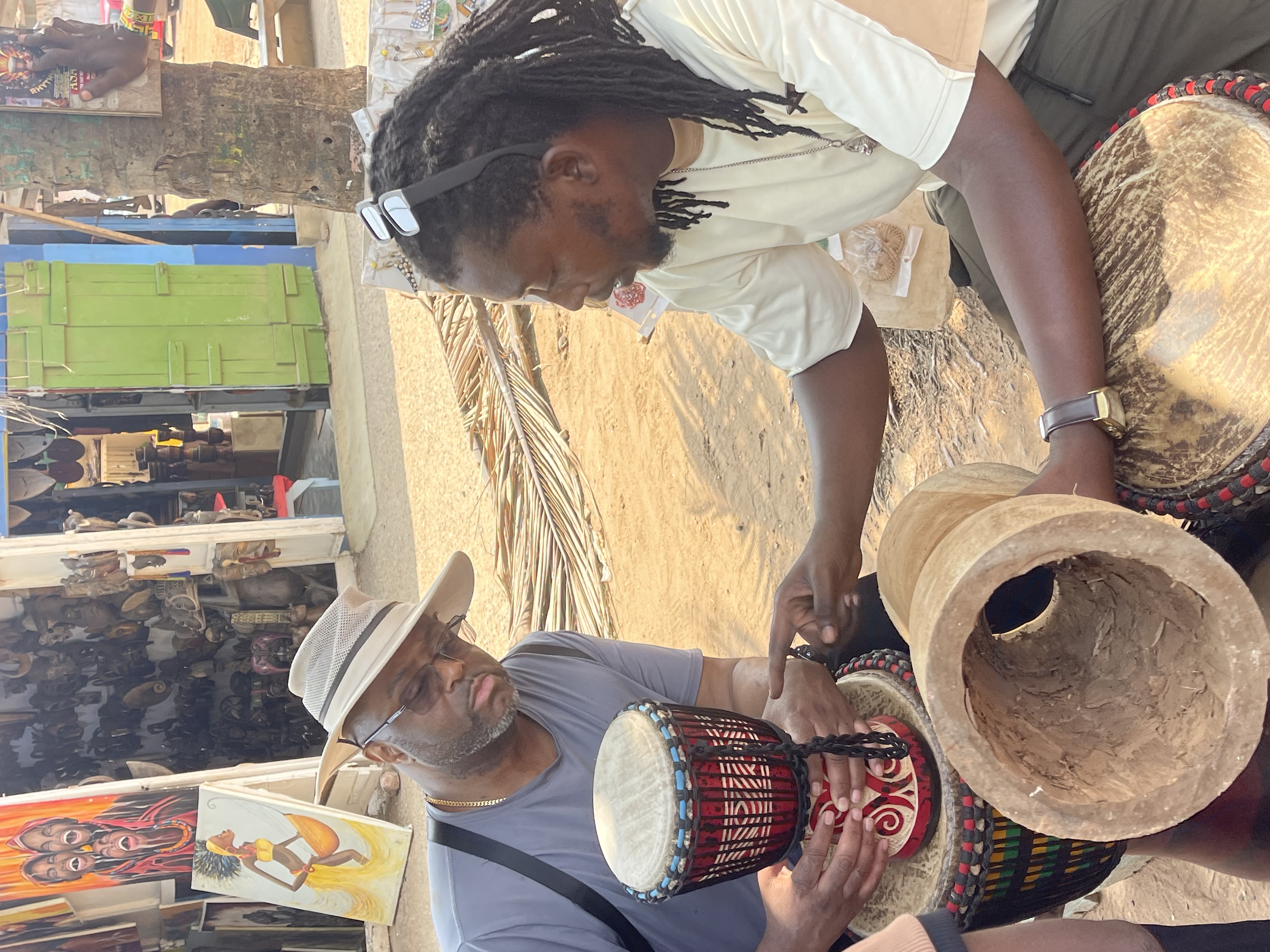
Experience the rhythmic heartbeat of West Africa with a hands-on Ghanaian Drumming Lesson. More than just a music class, this is an immersive entry into a complex language of sound that has communicated history, warnings, and celebrations for centuries. The Experience Master the Technique: Learn the three primary strikes—bass, tone, and slap—using the palms and fingers to produce distinct pitches. Polyrhythmic Immersion: You won't just play one beat; you'll learn how your rhythm fits into a "conversation" with the Gankogui (bell), Axatse (rattle), and supporting drums. Cultural Context: Most lessons include the history of specific dances like the Kpanlogo (Ga people) or Agbadza (Ewe people), explaining when and why each rhythm is performed. Call and Response: Engage in the traditional "dialogue" between the lead drummer and the group, a core element of African musical structure. History of the Ghanaian Drum The Talking Drum (Atumpan/Dondo): Traditionally, drums were used as a telecommunication system. By mimicking the tonal inflections of local languages (like Twi), drummers could send messages across villages faster than a runner. Sacred Origins: In many Ghanaian cultures, the drum is considered a living entity. The wood is often harvested from "sacred" trees, and libations are sometimes poured before a new drum is carved. Social Fabric: Historically, drums were the exclusive domain of the royal courts (Fontomfrom) or used to coordinate communal labor and warrior groups (Asafo). Key Facts Material Matters: Authentic drums are hand-carved from Tweneboa (cedar) wood and topped with dried antelope or goat skin for the drumhead. The British Museum The Master Drummer: To be a "Master Drummer" in Ghana requires years of apprenticeship and the ability to lead an entire community through various social transitions
Photo Gallery
You Might Also Like
Assin Manso Ancestral Slave River Park

Cape Coast Castle